Fremhevet

Me, myself and I

For my first blog entry, I figured I’d introduce myself.

First of all, I’m a Norwegian teenager in my second year of high school, but I’m also a sister and a daughter. The picture above is of me, my mother and my brother in front of the Leaning Tower of Pisa.


I love to travel and explore the world, but unfortunately, I have never had the opportunity to leave Europe.


My brother and I aren’t really close, but every once in a while we have these really nice moments together, like yesterday when I left a small bowl of Daim chocolates next to a cute little note for him. The note started «Dear Nusse» (Nusse is a nickname I have for my brother), and I continued telling him how proud I am of him and that he deserved a small treat, even though it was on a Monday. 😬


In English class this year I want to follow the election in the US and I want to learn about different issues the world is facing today.
I am curious about what’s happening in other places in the world, not only what’s going on in my tiny nation.


To be successful in school I need my teachers to guide me, which means showing me what I’m doing right, but also what I’m doing wrong. I also need a little understanding from my teachers as I am extremely shy and terrified of speaking in front of the entire class.


I figured I would end my first entry by telling you a little bit about my personal hero, my cousin, Sara. Sara is four years older than me and we have always been close. Two years ago she went to Australia to go to a Bible school and travel the world as a missionary. Then about half a year ago she came home and now she’s studying to become a teacher in Oslo.


Hope you enjoyed learning a little bit more about me. ❤

Broadsheet vs. Tabloid

The Guardian – broadsheet
The Daily Star – tabloid

The most eye-catching difference between the article from The Guardian and The Daily Star is the length of the articles. The article from The Guardian is significantly longer than the article from The Daily Star.

I also noticed that The Daily Star has put the picture in the background and written on top of it. The Guardian has separated the pictures and the writing.

Both articles have known authors. The authors of the article from The Guardian are Rebecca Ratcliffe and Eleanor Ainge Roy, and the author of the article from The Daily Star is Antony Thrower.

Norway vs. China

  Norway China
Power distance 31 80
Individualism 69 20
Masculinity 8 66
Uncertainty avoidance 50 30
Long term orientation 35 87
Indulgence 55 24

In the diagram above, one of the things you’ll notice is the huge difference between Norway and China when it comes to things like power distance, individualism, masculinity and long term orientation. Now, in what way does this influence the work relationships within these countries.

The term power distance refers to what degree less powerful members of institutions and organisations within a country expect and accept that power is distributed unequally. You’ll notice that in the diagram Norway scored rather low in this category, while China’s score was quite high. This is because in Norway we focus on being independent and equal, as well as having accessible superiors. The employees are often on first name basis with their employers since their relationships are often informal, with direct, participative and consensus orientated communication. In China, inequalities are more acceptable, hence their high score in this category. This country tends to have a polarized relationship between the subordinates and their superiors, leading to more formal workplaces with much more hierarchy than Norway.

Individualism is a category that looks at the degree of interdependence in a society. Norway has a rather high score in this category, as opposed to China’s quite low score. The reason for this is China’s culture of acting in the interest of a group, and not necessarily themselves. In the workplace this affects the hiring process and promotions, because family member often receive preferential treatment. In Norway, you’ll find that there is more focus on the individual, where personal opinions are valued and expressed. Still, there are clear lines between someone’s personal life and their work life. Based on this, I would say Norway is a country with much more independence in the workplace, while in China the workplace is a lot more collective.

Masculinity is one of the categories above and this refers to what motivates people, being the best or liking what you do. In this category Norway has an exceptionally low score, second lowest in the world after Sweden. This means that taking care of one another is a big priority here, where the focus is on people’s well-being, not on someone’s status. Having free-time and having a life outside of work is important in Norway. Here, an effective manager is someone who is supportive. China has a score that leans more in the direction of a masculine community, meaning that they focus on being the best. Here, you’ll find that people allow work to consume them, and many Chinese will sacrifice family and their free-time for work.

The last aspect of the diagram above, I’ll look into is long term orientation. This term is about how a society maintains their links to the past whist also dealing with the changes of today and the future. Norway has a somewhat low score in this category, meaning that we hold great respect for our traditions and are to some extent struggling with preparing for the future. Norway is particularly struggling with this in regard to environmental changes. An example would be how we’re still continuing to open up new areas where we can search for more oil. Some workplaces are doing well with regards to this, others not so much. There are also workplaces that primarily work to stop this development of these dangerous environmental decisions. Some organisations are even working together to sue the government, in regards to this issue. China scores quite high in this category, meaning you would be able to find humility and self-control in China.

Literary devices in songs

TASK

CHOOSE FOUR SONGS YOU LIKE AND GIVE EXAMPLES OF LITERARY DEVICES USED IN THESE SONGS.

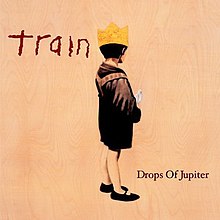
Bilderesultat for drops of jupiter train
Drops of Jupiter by Train

First, I’ll provide a few examples of literary devices from the song Drops of Jupiter by Train.

Similes

Example – «She acts like summer and she walks like rain» Example 2 – «She listens like spring and she talks like June»

Personification

Example – «But tell me, did the wind sweep you off your feet?»

Allusions

Example – «I’m afraid that she might think of me as Plain ol’ Jane»

Rhyme

Example – «Now that she’s back from that soul vacation Tracing her way through the constellation» Example 2 – «a story about a man who was too afraid to fly so he never did land» Example 3 – «Did you finally get the chance to dance along the light of day, and head back to the Milky Way«

Onomatopoeia

Example – «Na, na, na, na, na, na»

Bilderesultat for the climb miley cyrus

Secondly, the examples will be from the song The climb by Miley Cyrus

Alliteration

Example – «Gotta keep my head held high»

Rhyme

Example – «Every step I’m takin’
Every move I make feels lost with no direction
My faith is shakin’ «

Repetition

Example – «There’s always gonna be another mountain
I’m always gonna wanna make it move
Always gonna be an uphill battle»

Personification

Example – «My faith is shakin’ «

Allusion – The songs frequently refers to religion and the Bible

Example – «My faith is shakin'» Example 2 – The song mentions moving mountains

Bilderesultat for rise up by andra day

The third song I’ll be giving examples from is Rise Up by Andra Day

Metaphors

Example – «You’re broken down and tired
Of living life on a merry-go-round «

Hyperbole

Example – «I’ll rise up
And I’ll do it a thousand times again «

Alliteration

Example – «And you can’t find the fighter
But I see it in you so we gonna walk it out
Move mountains «

Imagery

Example – «And I’ll rise up
I’ll rise like the day «

Oxymoron

Example – «When the silence isn’t quiet «

Similes

Example – «I’ll rise like the day «

Personification

Example – «But I promise we’ll take the world to its feet «

Repetition

Example – «I’ll rise up»

Bilderesultat for not about angels birdy

The fourth and last song I’ll be providing examples from is Not About Angels by Birdy

Alliteration

Example – «But if you’d searched the whole wide world «

Metaphors

Example – «So is it wrong to toss this line

Rhetorical questions

Example – » Could you give it up? » Example 2 – «Would you dare to let it go? «

My work as a volunteer in South Africa

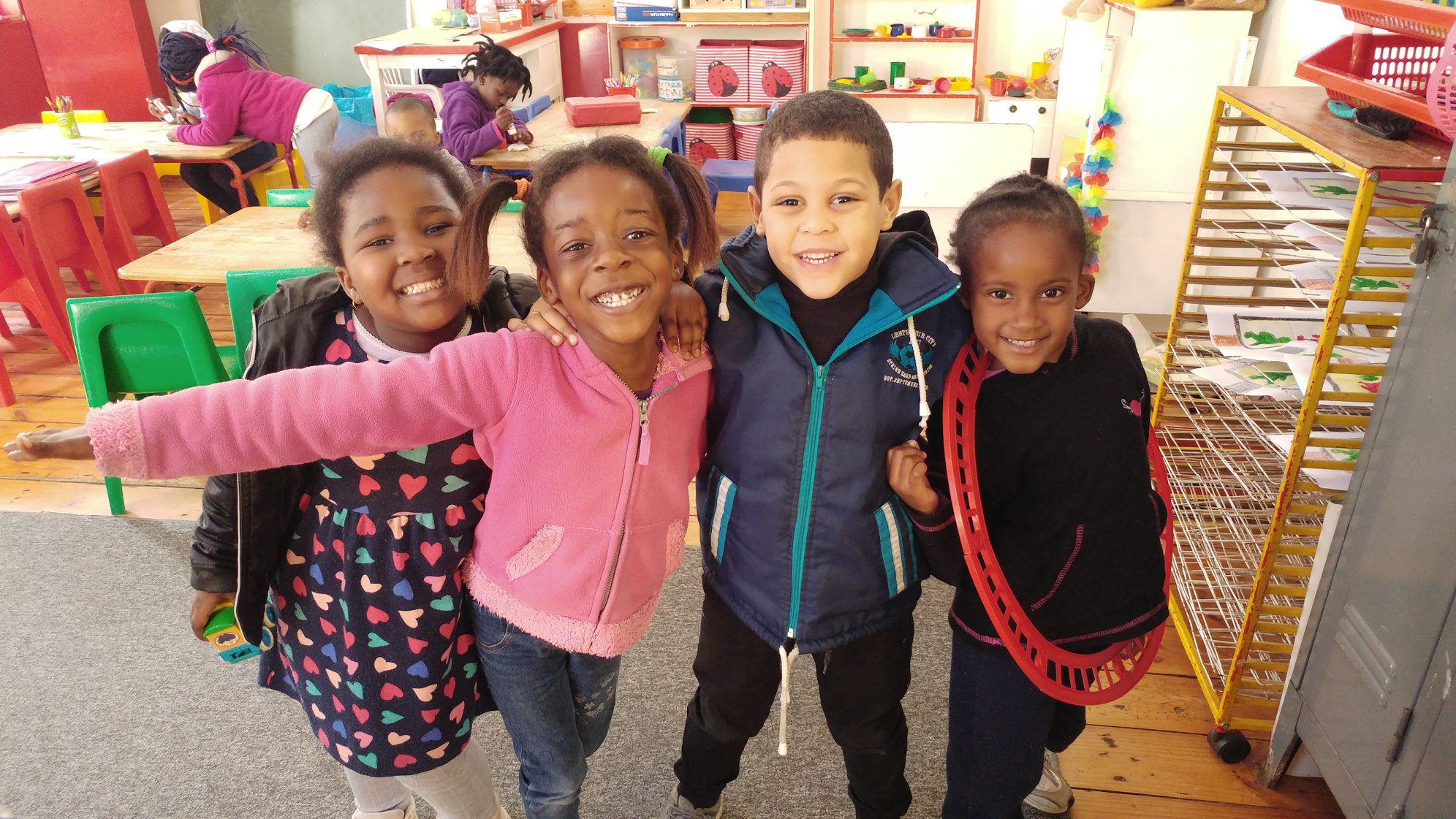
These are some children from a GoXplore school

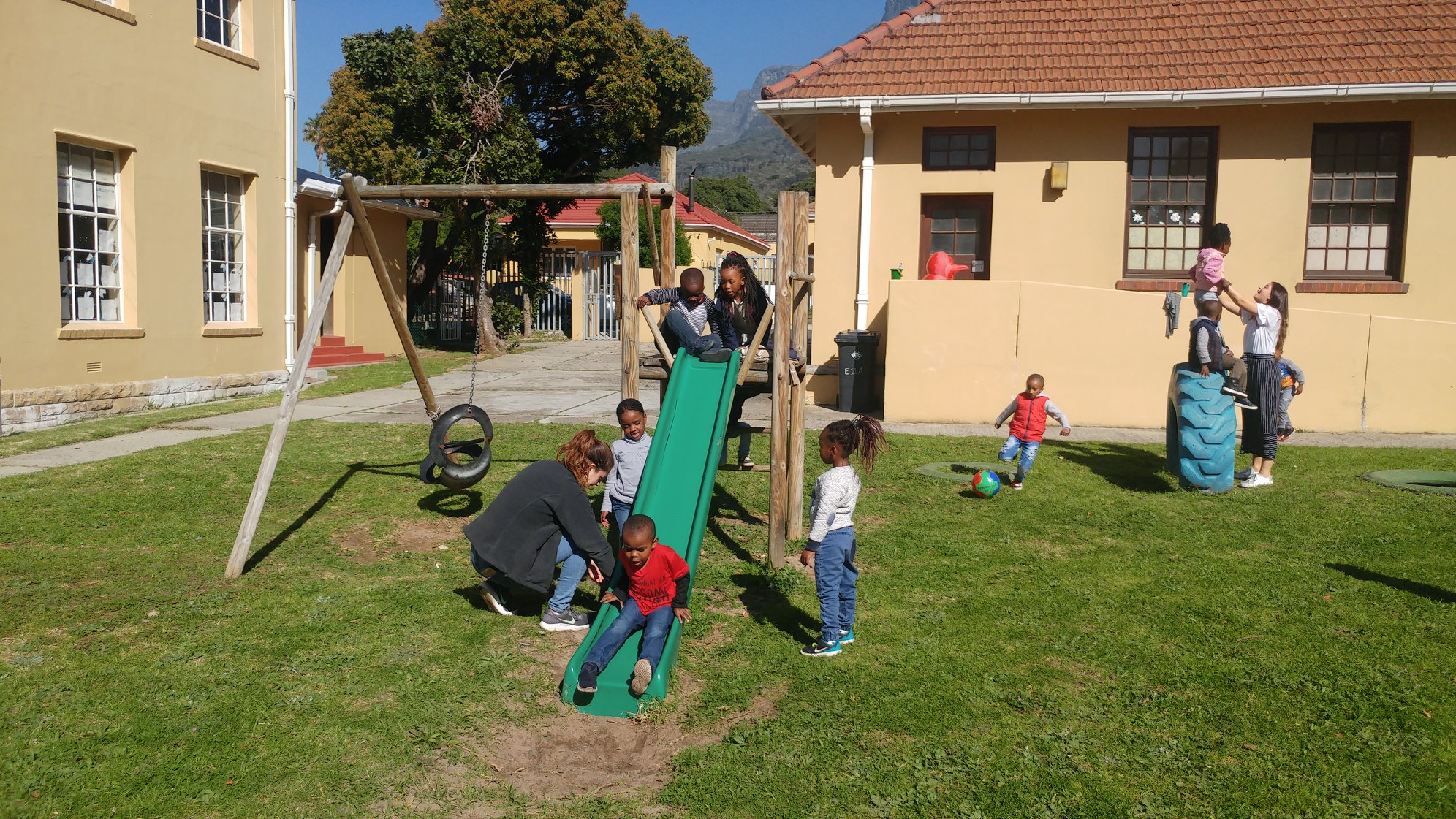
I love children, always have, and one day I aspire to become a teacher here in Norway, just like the rest of my family (my aunts, uncles, grandparents, cousin and father all work as teachers). However, before I start my journey to become a teacher, I have this desire to help out in less fortunate communities/ countries. Seeing as my goal is to one day become a teacher, I deducted that helping out in a pre-school in Cape Town, South Africa, for 8 weeks, would be the way to go.

I intend to work with the organization GoXplore for these 8 weeks and they do not cover plane tickets so I did some research and found the plane tickets that you see below. Because of the long distance between Norway and South Africa, the plane tickets are quite expensive, and the cheapest ones cost 6 680 kr. These are the ones I’m going for.

Source: https://fly4.emirates.com/CAB/IBE/SelectPrice.aspx

I will be staying with a host family and therefore I do not have to worry about housing or acquiring meals.

This is another GoXplore school

I have a HELFO-card, but seeing as I’m traveling outside of Europe, this does not help me much. I found travel insurance at Gjensidige. The travel insurance is called «Reise Ung», and it costs 105 kr per month and also covers my Health insurance. Since I’m only staying 2 months the costs of travel insurance are 210 kr. Source: https://www.gjensidige.no/privat/forsikring/ung-og-student/reise-ung-og-innbo-ung-i-detaljer

Since I’m staying in South Africa for less than 90 days, I do not need a visa for my trip, but I do, however, need my passport and I have to make sure it does not expire within three months after I have come back home after my trip. Source: https://www.regjeringen.no/no/tema/utenrikssaker/reiseinformasjon/velg-land/reiseinfo_sorafrika/id2424513/

Before my trip there are a couple of vaccines I have to take:

Hep A = prevents hepatitis A

Tyf =prevents typhoid 

BCG = prevents tuberculosis 

Rab = protects against rabies Source: https://www.fhi.no/sv/vaksine/reisevaksiner/verden/vaksiner-ved-reise-til-afrika/

According to the Norwegian Government’s website, one does not need to worry about the cultural etiquette in South Africa as most people in South Africa are used to being around tourists and foreigners. Source: https://www.regjeringen.no/no/tema/utenrikssaker/reiseinformasjon/velg-land/reiseinfo_sorafrika/id2424513/

Since I’m spending 8 weeks in the Teach a Child program with GoXplore the costs of my trip will be 14 500 kr (+ the plane tickets = 6 680 kr + travel insurance = 210 kr = 21 390 kr). Source: https://www.goxplore.no/program/frivillig-sor-afrika#priser

Jamaican Creole vs. Standard English

JAMAICAN CREOLE STANDARD ENGLISH
  No use of the «th»-sound
Example: Nondiles
  Use of the «th»-sound
Example: Nonetheless
  No conjugation in the past tense
Example: Out jump tree policeman
  Conjugation in the past tense
Example: Out jumped three policemen
  Sometimes the last consonant disappears
Example: Bes
  Always includes the last consonant
Example: Best
  Endings like -er or -r sometimes end with -ah
Examples: Showah and howah
  Keeps the original spelling
Examples: Shower and hour

Map over different creoles and varieties of English

This map has marked these creoles:

Hawai‘i Creole English (Hawaii)

Singlish (Singapore)

Bahamian Creole (The Bahamas and Turks and Caicos Islands)

Nigerian Pidgin (Nigeria)

It has also marked this one variety of English

Gullah (Florida, South Carolina and Georgia by Afro American communities)

Utforming | design et nettsted som dette med WordPress.com
Sett i gang